If you have lived in Montgomery for more than a few years, your mental map probably still puts the evening action on Montgomery Road, somewhere near the storefronts the Historic Preservation Commission walks visitors past every June. That map is out of date. The clearest proof isn't a press release. It's a men's clothing store.
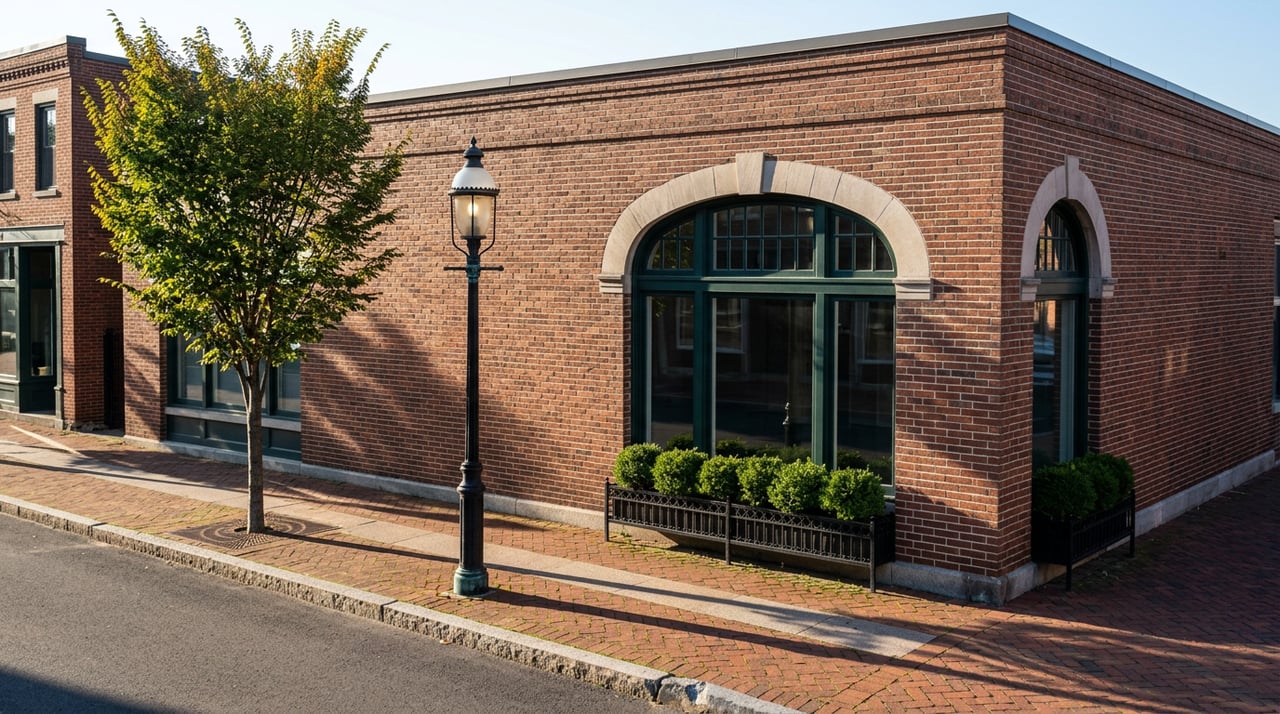
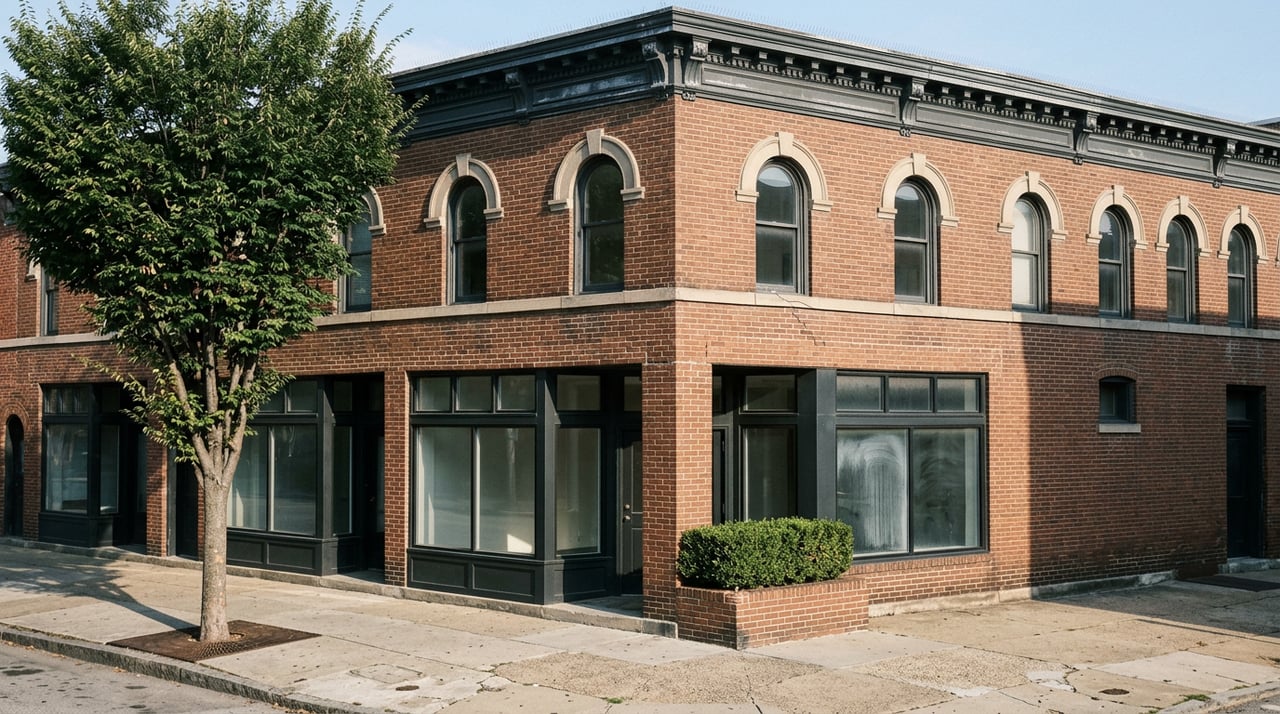
In 2022, Hellman's Fine Men's Apparel, a fixture of Historic Montgomery, announced it would leave its spot on the old strip and move into a storefront at Montgomery Quarter, the mixed-use development two blocks south at Montgomery Road and the Cross County Highway roundabout. A shop that had built its name in the historic core chose to relocate into the new one. That single decision tells you more about where Montgomery's foot traffic is headed than any ribbon-cutting photo.
The corner that finally got a reason to stay open past 8
For its first couple of years, Montgomery Quarter was mostly a daytime place. Pepsi moved its Cincinnati corporate office into the development's office building, pushing occupancy there to roughly 90 percent, and the ground-floor restaurant space filled in gradually: Kitchen Social opened its first Cincinnati-area location there, Deeper Roots Coffee took a space in the same building that spring, and Kozue arrived with sushi and ramen not long after. Livery, a Latin restaurant under the Cunningham Restaurant Group, and BRU Burger Bar had already signed on to join the retail lineup. All useful. None of it, on its own, gave the Quarter a reason to hold people there after dinner.
That changed on October 16, 2025, when The Hotel Rambler opened. It's a 128-room boutique property under Hilton's Tapestry Collection, and it did something the standalone restaurants around it couldn't: it put a bar and patio in the middle of the district that has to stay lit and staffed every night, not just until the dinner rush clears. That bar is called Sidecar, and on its first morning of bookings, nearly two dozen rooms filled in the first 90 minutes. A hotel needs an evening. A restaurant can close at nine. That difference is a big part of why Montgomery Quarter finally feels like somewhere to linger after work rather than somewhere to pick up takeout on the way home.
The scale of the bet behind all of this keeps growing too. The original project was pitched as a $150 million development. With Phase II now underway, adding roughly 239 to 240 apartments across four buildings to the 148 units already built in Phase I, the development team has said the combined project will top $300 million in value. Groundbreaking on those apartments happened in mid-2025, with occupancy targeted for 2028. If your picture of Montgomery Quarter is still the smaller version from a couple years back, the project itself has effectively doubled since then.
Two nights a week now belong to the fountain
Here's where the shift becomes something you can actually schedule around. The city's own community calendar shows the pattern still running this year: a Thursday Evening Concert at Montgomery Quarter on July 23, featuring Jimmy Lee King and Friends at the fountain, followed the very next night by Acoustic Nights at MQ, with singer-songwriter Bobby Crawford playing sets built around rock, pop, and country favorites. Two live-music nights, back to back, at a fountain that a few summers ago went quiet the moment the office crowd left for the day.
There's a smaller, easier-to-miss piece of this too. The city has also been running a midweek farm stand at Montgomery Quarter Park, a compact version of a market with three vendors: Jessie's Garden for produce and microgreens, Birch Creek Bakery for bread, and Hilltop Family Meat and Milk. It's not trying to replace the Saturday market. It's evidence that the Quarter now generates enough weekday foot traffic to support its own small grocery run, which is not something you could have said about that corner three summers ago.
The market that decided it wasn't just a market anymore
None of this means the older, established anchor of Montgomery's food calendar lost relevance. The Montgomery Farmers' Market still runs Saturdays from 9 a.m. to 12:30 p.m., May 2 through October 31, in the Montgomery Elementary School lot, and it closes every July 4 so the city can hold its Independence Parade and Festival instead. That schedule hasn't changed. What has changed is the market's sense of its own job.
For the 2026 season, organizers added a permanent Health and Wellness Booth and a platform for young entrepreneurs, moving the market's identity from a produce stop toward something closer to a civic institution.
"Our market has become a jewel for the community, built on a combination of special vendors and shoppers," said Dennis Hirotsu, board chair for the Montgomery Farmers' Market.
That's not a small rebrand. A market that adds wellness programming and space for kids running their own small businesses is telling you it expects to be a weekly habit people build a routine around, not a once-a-month errand.
The night the city admits the map is split
If you want the clearest sign that even City Hall sees Montgomery as two centers of gravity now, look at the kind of event the city bothers to design. Montgomery's events calendar has featured a casino-themed evening crawl that deliberately runs through both Historic Downtown Montgomery and Montgomery Quarter, with participating businesses in each district staying open late for games and prizes. You don't build a route that stitches two areas together unless you've noticed people aren't naturally walking between them anymore.
The rest of the calendar rounds out the year without erasing that split. A season-closing Dog Swim at the Montgomery Community Pool, a car show for classic cruisers and hot rods, guided walks through Johnson Nature Preserve led by Dr. Denis Conover, a botany professor at the University of Cincinnati, and stargazing nights with the Cincinnati Observatory all keep running on their own schedules. None of that is new in the sense of changing where people gather. It's the reliable texture around the part of the calendar that actually moved.
What this means if you already live here
None of this requires you to do anything. You already live here. But if your Thursday routine still defaults to whatever's on Montgomery Road because that's where the action used to be, you're skipping two nights a week of programmed live music two blocks away, a hotel bar that didn't exist ten months ago, and a lineup of restaurants that have quietly become a full evening out rather than a quick bite. The historic downtown isn't going anywhere. The Universalist Church, the storefronts, the fall Lanterns & Landmarks walk, all of that stays exactly what it's always been. What's different is that it's no longer the only place in Montgomery worth showing up to after 6 p.m., and the city's own event calendar is now built around getting you to notice both halves.
If you're the kind of person who tracks a neighborhood by what's actually happening on the ground rather than what a listing photo shows, that split is worth knowing about even if a move is nowhere on your radar. And if you're ever curious what all this new activity does to the value of a house on the streets feeding into Montgomery Quarter, that's exactly the kind of question LIVIN IN CIN tracks for a living. Request your personalized home valuation and we'll tell you what's really happening on your block, not just at the fountain.